Reviewing Hippo 3D SVG Shadow Boxes
As a graphic designer who spends half my life tweaking kerning and the other half explaining to clients why "making the logo bigger" isn't always the answer, I approach every new graphic design asset with a healthy dose of skepticism. We are constantly bombarded with digital products promising to revolutionize our workflow, but few deliver on the promise of versatility and professional polish. Recently, I downloaded the Hippopotamus Animals Shadow Box Layered file to test its viability for a current client project involving a boutique children’s brand. What I found was not just a cute clipart element, but a robust tool for creating depth and narrative in modern design.
First Impressions: Mood and Visual Weight
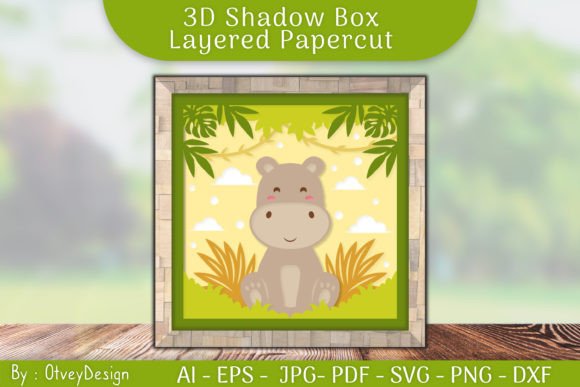
The immediate standout feature of the Hippopotamus Animals Shadow Box Layered is its structural integrity. In the world of Shadow Boxes, poor layering can lead to visual clutter, where details get lost when scaled down. This asset, however, maintains clear separation between layers. The mood it creates is whimsical yet grounded. It does not scream for attention like a neon sign; instead, it invites the viewer to look closer. For a designer, this is crucial. It means the illustration can serve as a hero graphic without overpowering accompanying typography.
When I first opened the files, I was looking for clean vector paths. The 3D SVG format provided exactly that. The lines were smooth, with no unnecessary anchor points that often plague lower-quality SVG design files. This level of cleanliness is non-negotiable when you are preparing files for cutting machines or large-format printing. The aesthetic leans towards a handmade, organic feel, which aligns perfectly with the current trend in small business branding that favors authenticity over corporate sterility.
Real-World Application in Client Projects
I tested this asset across several mockups to see how it held up in real commercial design scenarios. My client needed visuals for a nursery decor line, but also wanted cohesive marketing visuals for their social media launch. Here is how the Hippopotamus Animals Shadow Box Layered performed:
- Packaging Design: I placed the layered hippo on a kraft paper box mockup. The layered effect created a tangible sense of depth, making the flat print look like a premium embossed element. It elevated the perceived value of the product instantly.
- Social Media Graphics: For Instagram posts, I used the asset as a central focal point. Because the layers are distinct, I could animate them slightly for a Reel, giving a subtle parallax effect that increased engagement.
- Cricut Project Integration: The description notes that there is an SVG cut file in the downloaded ZIP. I imported this into design software compatible with Cricut machines. The separation of layers was logical, meaning minimal cleanup time. This is vital for designers who offer physical printable design products or custom cuts.
This versatility confirms that the asset is not just a static image but a flexible component for a broader design bundle. Whether you are creating t-shirt design concepts using sublimation or designing intricate sticker design sheets for an Etsy product launch, the file structure supports diverse outputs.
Strategic Placement and Visual Hierarchy
Understanding where to place this asset is key to maintaining visual hierarchy. The Hippopotamus Animals Shadow Box Layered works best in large layout areas where its details can breathe. It shines as a hero graphic on landing pages, as a central motif on invitations, or as a decorative accent on product mockups. However, designers must be cautious. In crowded layouts or small sizes, such as favicon dimensions or footer icons, the intricate layering may merge into a single blob, losing its charm.
I would advise against using this specific asset for minimalist corporate branding or projects requiring stark, high-contrast simplicity. It is too organic and detailed for those contexts. Instead, it thrives in environments that celebrate creativity, such as editorial design for children’s books, web design for creative agencies, or Canva template kits aimed at hobbyists. When paired with the right typography—perhaps a rounded sans serif or a playful handwritten font—the hippo becomes part of a cohesive brand story rather than just an isolated illustration.
Technical Checks for Professional Use
Before delivering any final files to a client, I run a standard battery of tests. Here is my practical advice for anyone integrating this digital product into their workflow:
- Contrast Testing: Always test the asset on both light and dark backgrounds. While the layered nature provides some inherent contrast, ensure the innermost layers do not disappear against dark hues. You may need to adjust the color palette to suit your specific brand identity.
- Black and White Preview: Convert the design to grayscale. If the layers become indistinguishable, you may need to add stroke lines or adjust spacing to preserve the 3D SVG effect in monochrome prints.
- File Format Inspection: Verify the PNG transparency if included. Clean edges are essential for sublimation design and overlay work. Check the SVG editability to ensure you can recolor individual layers without breaking the group structure.
- Licensing Verification: Always confirm the commercial license terms. As a professional, I need to know if I can use this in client work, for print-on-demand services, or in mass-produced goods. Clear licensing builds trust and protects your business.
Enhancing Brand Consistency and Engagement
Ultimately, the value of the Hippopotamus Animals Shadow Box Layered lies in its ability to enhance emotional appeal. In logo design and brand identity work, animals often serve as mascots that humanize a brand. This hippo, with its gentle and layered presentation, evokes feelings of warmth and care. This is invaluable for businesses targeting families, educators, or wellness sectors. It helps build visual trust because the quality of the asset reflects the quality of the brand.
Moreover, using such a distinctive illustration sets a project apart from generic stock imagery. In a saturated creative marketplace, unique assets like this help brands achieve recognition. Whether used in Pinterest pins, blog visuals, or physical wall decoration, it adds a layer of professionalism that generic clipart simply cannot match. It signals to the audience that thought and effort went into the visual presentation.
Final Verdict for Designers
The Hippopotamus Animals Shadow Box Layered is a solid addition to any designer’s library of design assets. It bridges the gap between digital flexibility and physical craft, making it ideal for hybrid projects that span web design and physical merchandise. While it requires careful handling regarding scale and background contrast, its potential for creating engaging, multi-dimensional visuals is high. For designers working with handmade business clients or those looking to add a touch of whimsical sophistication to their marketing visuals, this asset is worth the investment. It is not just a picture of a hippo; it is a tool for storytelling, depth, and brand differentiation.