Reviewing the Cat on Books Box Card for Embroidery
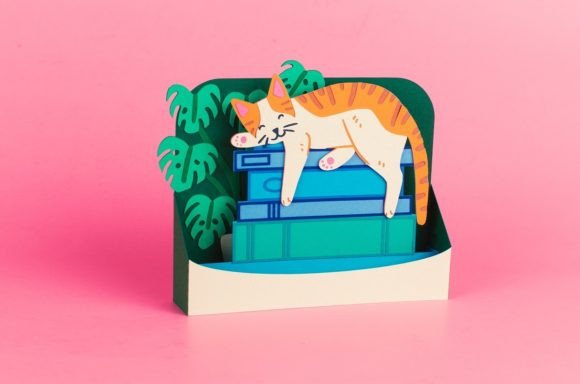
As a designer who spends more time staring at stitch maps than actual fabric, I have learned to be skeptical of cute concepts. We all know that what looks charming in a digital preview can sometimes turn into a tangled mess of thread breaks and puckering on the hoop. However, when I first pulled up the Cat on Books Box Card, my initial reaction was one of genuine curiosity. This isn’t just another generic motif; it is a piece with personality, created by Furrow and Feather, that seems to understand the quiet joy of reading and the whimsical nature of cats.
For those of us running small embroidery businesses or crafting personalized gifts, finding designs that bridge the gap between novelty and sophistication is rare. This design, categorized under Ornaments and available as a 3D SVG, offers a unique structural element that sets it apart from flat, standard embroidery files. But does it hold up under the needle? Let’s dig into how this design performs in real-world applications.
First Impressions: Mood and Visual Personality
The immediate vibe of the Cat on Books Box Card is cozy and intellectual. It appeals directly to the "bookish cat lover" demographic, which is a massive and loyal market segment for Etsy sellers and boutique owners. The layout suggests a pop-up structure, which implies depth and interaction. In embroidery terms, this often translates to layered applique or intricate fill stitches that mimic the folding of paper.
What strikes me most is the potential for customization. The description notes that you can change the color of the kitty and add your own book titles. This flexibility is crucial for commercial embroidery projects. It allows you to transform a single design asset into dozens of unique products. Whether you are creating a personalized gift for a librarian or a custom apparel line for a local bookstore, this adaptability increases the perceived value of the finished product.
Real-World Application: Beyond the Hoop
I recently worked on a project for a client who wanted to launch a line of literary-themed tote bags. The Cat on Books Box Card seemed like the perfect centerpiece. Here is how I envision it performing across different mediums:
- Tote Bag Design: Canvas provides a stable base for the potentially dense stitching of a box card structure. The contrast of thread colors against natural cotton can make the cat pop, while the books offer a great opportunity to showcase precise satin stitch work for the spines.
- Sweatshirt Embroidery: Imagine this on the left chest of a crewneck. The cozy theme aligns perfectly with the fabric. However, you must be mindful of the hoop size and the stretch of the fleece. A proper stabilizer is non-negotiable here to prevent distortion of the book shapes.
- Embroidered Patch: This design could shine as a standalone patch. The defined edges of the books and the cat silhouette would look crisp on a twill background. Patches are a low-risk way to test the design’s appeal before committing to larger garments.
- Baby Embroidery: For nursery decor or baby items, simplifying the color palette to pastels could soften the look. Just ensure that any small details, like tiny book titles, are large enough to be safe and durable for children’s items.
For holiday embroidery, this design is a goldmine. It fits seamlessly into gift-giving seasons, especially for teachers, readers, and pet owners. The ability to customize book titles means you can create hyper-personalized items that feel thoughtful and bespoke, rather than mass-produced.
Technical Considerations and Stitching Clarity
While the concept is strong, the execution depends heavily on the technical quality of the embroidery file. Since this is described as a 3D SVG, it likely involves layers or complex geometry. When converting or using such designs for machine embroidery, stitch density becomes a critical factor.
If the design relies heavily on fill stitch to create the illusion of a 3D box, you need to watch out for bulk. On thin fabric, high stitch density can cause puckering. I always recommend testing the design on scrap fabric first, ideally using the same material you plan to use for the final product. Check how the thread colors interact. High contrast is good for visibility, but if the stitch density is too high, the fabric might pull away from the hoop marks.
Another concern is the small details. If the book titles are rendered in tiny lettering, they may not stitch out clearly on all machines. Satin stitch columns that are too narrow can break easily, while running stitch outlines might get lost if the thread color is too similar to the fabric. I advise inspecting the design zoomed in at 100% on your software before loading it onto the machine. Look for excessive jumps or confusing pathing that could lead to thread nests.
Where to Use Caution
Not every surface is suitable for this design. Curved surfaces like caps present a challenge for box-like structures. The distortion inherent in cap embroidery could warp the straight lines of the books, making the design look skewed. Similarly, stretchy fabrics require extra care. Without a cut-away stabilizer, the tension from the stitches could distort the cat’s shape over time.
Dark fabrics can also be tricky if the design relies on subtle shading. Ensure you have high-quality thread colors that stand out. If the design includes white or light-colored threads for the pages of the books, make sure your machine tension is perfectly calibrated to avoid looping or bird-nesting on the back.
Enhancing Brand Consistency and Value
For craft business owners, consistency is key. The Cat on Books Box Card offers a distinct aesthetic that can help build brand recognition. If your shop focuses on cozy, intellectual, or whimsical themes, this design reinforces that identity. Using it across various products—aprons, pillow covers, tea towels—creates a cohesive collection that encourages multiple purchases.
Moreover, the professional presentation of the finished product matters. Clean stitching, proper trimming of jump stitches, and careful pressing can elevate this design from a simple hobby project to a boutique-quality item. Customers trust brands that pay attention to these details. A well-executed embroidery project signals quality and care, which justifies higher price points and fosters customer loyalty.
Practical Designer Notes
Before you commit to producing this design for commercial sale or personal use, keep these practical steps in mind:
- Verify Licensing: Always confirm the license terms provided by Furrow and Feather. Ensure you are allowed to use the design for commercial purposes if you plan to sell finished items.
- Test on Scrap: Never skip the test stitch. Use the same fabric and stabilizer combination you intend to use for the final product.
- Check Hoop Size: Confirm that the design fits within your machine’s hoop capabilities. If it requires a large hoop, ensure your machine can handle the weight and movement.
- Mockup Variations: Create digital mockups in both black and white to check for contrast issues. Visualize how the design looks on different fabric textures.
- Stabilizer Selection: Choose the right stabilizer for your fabric. Cut-away for knits, tear-away for wovens, and consider topping for textured fabrics like towels or fleece.
In conclusion, the Cat on Books Box Card is a promising addition to any designer’s library. It combines emotional appeal with technical intrigue. While it requires careful handling regarding stitch density and fabric choice, its versatility and charm make it a valuable asset for creating memorable, high-quality embroidered goods. Whether you are an experienced decorator or a hobbyist looking to expand your skills, this design offers a rewarding challenge and a delightful result.